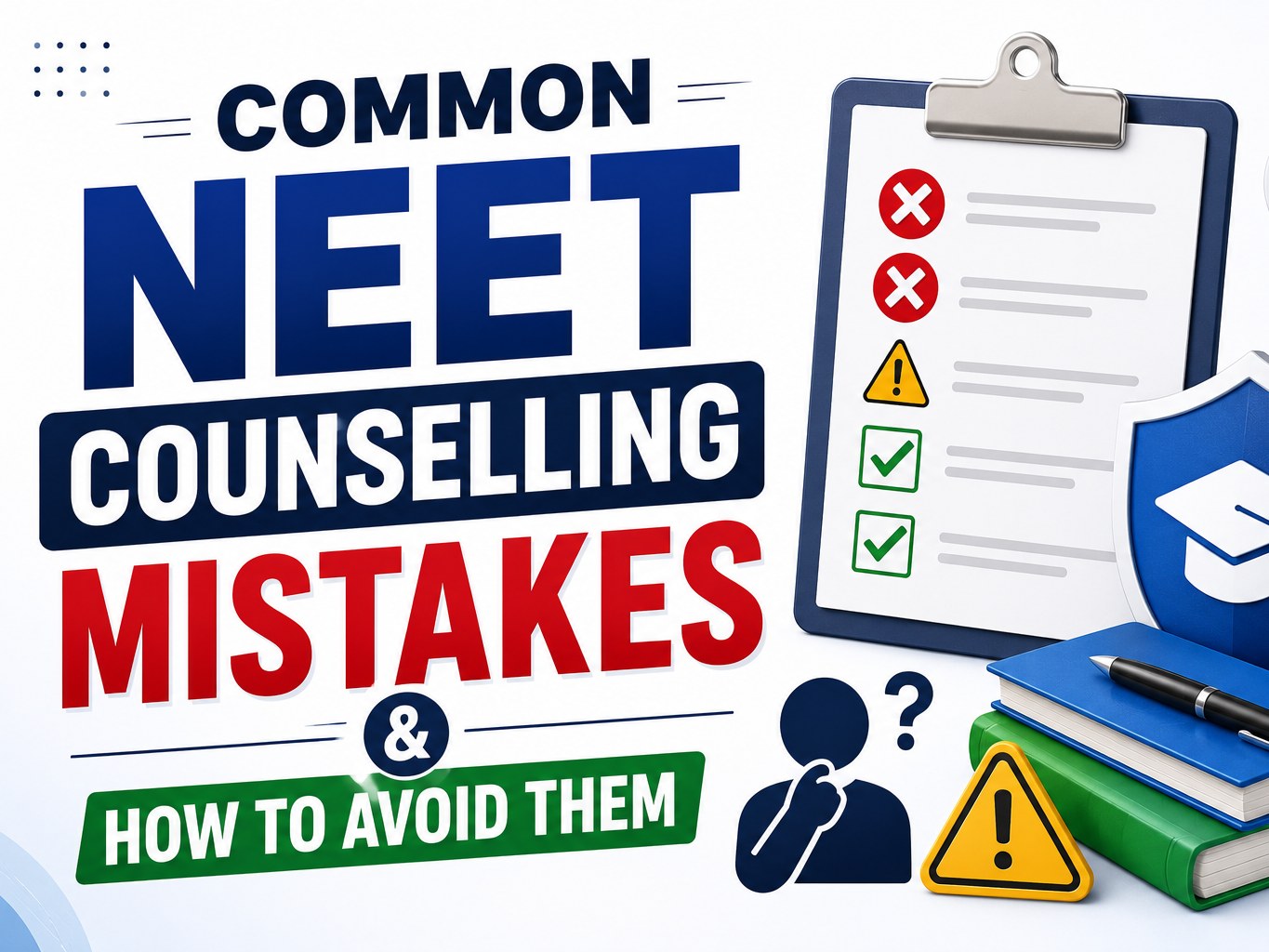
Many students work hard for months to clear NEET, but when the counselling process begins, small mistakes can cost them a good college or even a seat. NEET counselling is not only about rank, but it’s also about planning, timing, document readiness, and smart choice filling.
This blog explains the most common NEET counselling mistakes students make and how you can avoid them, using a simple, easy-to-understand approach. Consider this your personal student guide to navigate MCC and state counselling smoothly, especially if you are planning through platforms like Shikkha Counselling or doing it independently.
Not Understanding the Counselling Process Properly
Many students rush into NEET counselling without understanding how the process actually works. Terms like “AIQ”, “Freeze”, “Float”, “Withdraw” or “Stray Vacancy” often confuse students. As a result, they make wrong decisions during choice locking or reporting.
You can avoid this confusion by first taking the time to understand how NEET counselling actually works. Before doing anything, read the official counselling brochure carefully. Many doubts disappear once you understand the rules, the flow of rounds, and the meaning of important terms. Students often rush without knowing the difference between the All India Quota (AIQ) and the State Quota, which leads to wrong expectations and incorrect choice filling.
It’s also important to learn what each option, Freeze, Float, and Withdraw, means before you select them. These options play a major role in deciding whether you keep your seat, upgrade to a better one, or exit the process altogether. Misunderstanding even one of these can completely change your allotment result.
Here are the key options you must understand clearly:
Freeze: You accept the allotted seat and do not want any upgrade.
Float: You accept the seat but remain open to upgrades in later rounds.
Withdraw: You leave the counselling process entirely.
If the system feels overwhelming, following guidance from trusted platforms like Shikkha Counselling can help you stay on the right track. A small misunderstanding can impact your entire admission outcome, so begin your counselling journey with clarity and confidence.
Waiting Until the Last Day for Registration
One of the simplest yet most damaging NEET counselling mistakes is delaying registration. When students wait until the final hours, websites often slow down or crash due to heavy traffic. This leads to failed submissions or incomplete forms.
How to avoid this mistake:
You can easily avoid this mistake by registering early preferably on the first or second day rather than waiting for the deadline rush. Before the registration window even opens, make sure all your scanned documents are already prepared and saved in the correct format. Completing the payment early also helps you avoid server delays, which are very common during peak hours. It is equally important to double-check your mobile number and email ID, because any error in these details can stop you from receiving verification OTPs.
Taking these simple steps ahead of time lowers stress and keeps you safe from the common last-minute NEET allotment errors many students face every year.
Poor Choice Filling Strategy
mistakes. Some add only a few colleges, while others create a completely random list without checking their realistic chances. Many also place top colleges at the beginning even when their rank does not match those cutoffs. Because of these errors, students often end up in an undesired college or, in the worst cases, without any seat at all.
To avoid this, start by preparing a proper list of colleges based on your own rank, category, location preference, fee structure, and the hospital standards of each institute. This helps you understand what is practically achievable. A balanced list should move from your dream options to realistic ones and finally to safe choices that match your actual standing. Having around 30–50 well-researched options is usually ideal, because selecting too few choices can reduce your chances of being allotted a seat.
If you find the process confusing, using a guided counselling tool or expert support such as Shikkha Counselling can help you make more confident decisions. A carefully planned choice list becomes your strongest weapon during NEET counselling and ensures you do not miss good opportunities.
Not Checking Round Cutoffs Before Filling Choices
Students often skip researching previous years’ cutoffs. This leads to unrealistic choices that don’t match their rank, reducing the chance of getting a good seat.
How to avoid this mistake:
Check last 3 years’ cutoffs for each college.
Compare cutoffs for your category (UR/OBC/SC/ST/EWS).
Look at both AIQ and State Quota patterns.
Prioritize colleges where your rank fits comfortably.
Cutoffs change each year, but they still offer a guiding idea of what’s achievable.
Ignoring Document Verification Requirements
Many students lose their seats during NEET counselling simply because they overlook document requirements or submit incorrect versions. Something as small as a missing signature, the wrong category certificate, or an invalid domicile document can result in the cancellation of an allotment. Even forgetting to carry photocopies at the time of reporting can delay or jeopardize admission.
To avoid these issues, it is essential to keep all your important documents organized well before counselling begins. Create a dedicated folder and place your NEET scorecard, admit card, Class 10 and 12 marksheets, category certificate (if you have one), domicile certificate, ID proof, and passport-sized photos inside it. Along with the originals, keep several photocopies around 5–6 copies of each document—so that you never have to scramble at the last moment. It is also wise to store scanned versions on your phone or a USB drive for quick uploads during online verification.
Most importantly, follow the official checklist provided on the MCC or your state counselling website. When your documents are ready and neatly arranged, half of your counselling-related stress disappears, and the entire admission process becomes much smoother.
Not Locking Choices on Time
Many students mistakenly believe that simply “saving” their choices is enough during NEET counselling. But unless the choices are officially locked before the deadline, the system may auto-lock them in the last saved order—or even reject the form if the session expires. This small misunderstanding often leads to wrong allotments or missed opportunities, making choice locking one of the most crucial steps in the entire process.
To avoid this, always make sure you lock your choices after finalizing your preference order. Once the choices are locked, download the official “choice locking printout” and keep it safely as proof. Do not wait until the last hour to do this because the server often becomes slow or unresponsive due to heavy traffic. After locking, check your list again to confirm that the order of colleges is exactly as you intended.
Choice locking is the final confirmation of your counselling decisions, and skipping it or delaying it can completely change your seat allotment. Treat this step with full seriousness to avoid avoidable errors.
Getting Influenced by Rumours or Peer Pressure
One of the biggest traps during NEET counselling is making decisions based on what others say rather than relying on official information. Students often get carried away by social media posts, friends’ opinions, or comments from random groups claiming that “this college is better” or “that cutoff will drop.” These unverified statements create confusion, raise false hopes, and push students toward poor choice filling decisions. In counseling, following hearsay can easily result in choosing the wrong college or missing a better opportunity.
To avoid falling into this trap, always trust official sources such as MCC, state counselling portals, and verified notices. Build your choice list based on your own rank, category, budget, and long-term goals—not someone else’s assumptions. If you need guidance, rely on experts or certified platforms like Shikkha Counselling rather than crowd opinions. Also stay away from rank predictions or “expected cutoffs” circulating online without proof, as they often mislead students.
Your future depends on factual, informed decision-making. In counselling, clarity comes from trusted information—not from rumors echoing online.
Skipping State Counselling While Focusing Only on AIQ
Many students make the mistake of relying only on MCC’s All India Quota (AIQ) counselling and ignore their own state counselling. This is a major error because state quota often provides far better opportunities, especially for students who hold domicile in that state. State counselling usually has lower cutoffs, more reserved seats for local candidates, and a larger number of private college options. Ignoring state rounds greatly limits your chances and reduces the number of colleges available to you.
To avoid this, always participate in both AIQ and your state counselling. The more counseling rounds you are part of, the more doors open for you. State quota seats are usually easier to secure because you compete only with students from your own state, not with candidates from all over India. Private colleges also become more accessible during state rounds, giving you additional backup choices.
Here are the key points to remember:
State quota cutoffs are often lower than AIQ.
Home-state students get more seats and better chances.
Private college availability increases during state counselling.
Always check official state websites for updated eligibility and dates.
In counseling, more opportunities mean more chances of getting a seat. Expanding your scope beyond AIQ is one of the smartest strategies for securing a government or private MBBS seat.
Not Reporting to the Allotted College on Time
After allotment, students must report physically (or online, depending on instructions). Many lose their seats because they miss the reporting deadline.
How to avoid this mistake:
Read your allotment letter carefully.
Reach the college 1 day before deadline if possible.
Carry all required documents and fees.
Confirm your admission in writing.
Missing reporting dates is one of the costliest NEET counselling mistakes.
Poor Time Management During Counselling Week
Counselling moves very quickly, and many students start to panic because they cannot manage all the tasks happening at the same time. Registration, uploading documents, researching colleges, filling choices, locking them on time, and keeping track of notifications can feel overwhelming. When everything happens within a short window, even confident students begin to lose control and make mistakes. This pressure often comes from trying to do too much at once without a clear plan.
The best way to avoid this chaos is by following simple time-management habits inspired by the discipline seen in JEE preparation. Instead of rushing through everything randomly, divide your counselling responsibilities across the day so that each step gets proper attention. Keep your documents ready beforehand, stay focused during choice filling, and review the portal regularly so you never miss an update.
Some helpful habits include:
Set small counselling tasks for each day instead of doing everything at once.
Keep all required documents scanned and organized before counselling begins.
Avoid multitasking while filling choices; stay fully focused to prevent errors.
Check the MCC or state portal twice a day for fresh notifications.
Keep phone alerts on for OTPs, emails, and important messages.
Managing your time wisely protects you from missing deadlines and helps you stay calm throughout the entire counselling process. Good planning turns a stressful journey into a smooth one.
Not Analyzing Seat Allotment Results
Many students make the mistake of reacting emotionally when they receive a seat—either accepting it too quickly out of fear or rejecting it impulsively because it wasn’t their first choice. This emotional decision-making can harm your chances. Instead of looking at the bigger picture, they ignore important factors such as cutoff trends, upgrade possibilities, or realistic expectations for the next round. Without proper analysis, a student may give up a good seat or hold on to one that could have been improved.
To avoid this, always take a moment to evaluate your allotment carefully. Compare your seat with previous years’ cutoffs and check whether better options are genuinely possible in upcoming rounds. Understanding your chance of upgrading helps you act with clarity rather than panic. If you feel unsure, seek advice from verified counsellors or trusted platforms instead of making a rushed choice on your own.
Keep these points in mind while analysing your allotment:
Compare your allotted seat with historical cutoff patterns.
Judge whether a higher-preference seat is realistic based on your rank.
Assess upgrade chances logically, not emotionally.
Ask an expert if you feel uncertain.
The goal of this stage is to make informed decisions. Proper allotment analysis gives you direction and confidence—ensuring that your final choice is strategic, not rushed.
Not Taking Professional Guidance When Needed
Counselling is confusing and lengthy. Doing it alone increases the chance of NEET allotment errors.
How to avoid this mistake:
Use official portals and helpdesks.
Refer to verified guides like Shikkha Counselling for structured, step-by-step support.
Don’t hesitate to ask for help, your future is worth it.
Guidance is not weakness, it’s strategy.
To Conclude: A Calm Mind Wins Counselling
NEET counselling is not just a technical process; it’s an emotional journey. With pressure mounting, even simple mistakes can affect seat allotment. But if you understand the system, stay organized, research properly and follow reliable advice, you can avoid all the major pitfalls.
Remember:
Counselling is your chance to convert your rank into a real medical seat.
Take your time.
Think clearly.
Follow each step with confidence.
Let this student guide help you move ahead without fear. Your goal is within reach, just one careful step at a time.
Article Stats
You Might Also Like
What Is the MS Course? A Complete Guide to Introduction, Eligibility, NEET PG Counselling and Preparation
What Is the MD Course? A Complete Guide to Introduction, Eligibility, NEET PG Counselling and Preparation
Tripura MBBS BDS Round 3 Re-Revised Schedule 2026: Choice Filling, Merit List, Allotment and Admission Dates