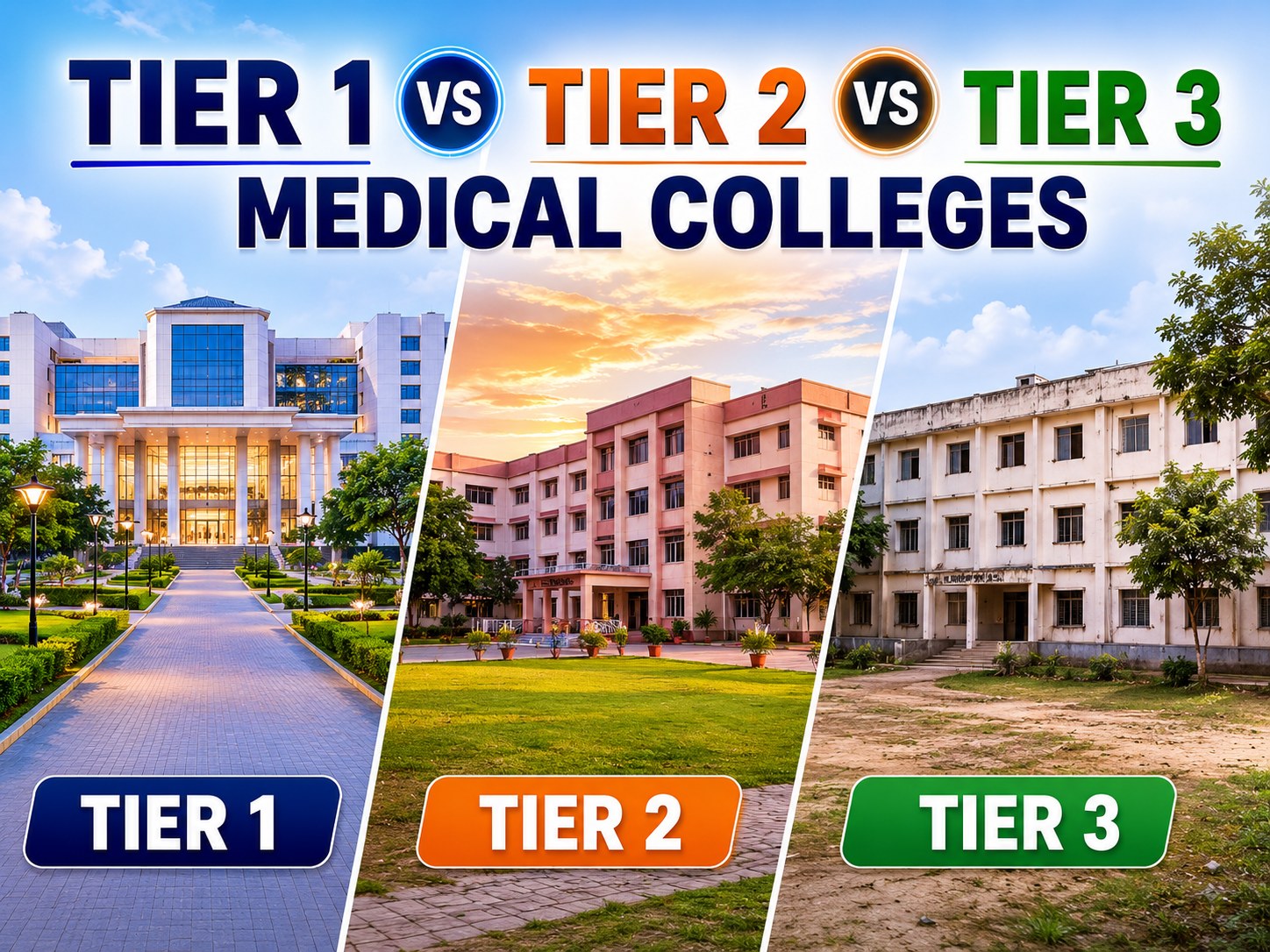
Choosing the right medical college is one of the biggest decisions for any NEET aspirant. Many students get confused between government colleges, private institutions, deemed universities, and newer medical colleges. To make things easier, experts often categorise them into Tier 1, Tier 2, and Tier 3 medical colleges.
But what does this tier system really mean? How do the colleges differ? And how should a student decide which one is right for them during MBBS admission?
This blog explains everything in a simple, student-friendly way. Whether you want the Best Medical Colleges, want help understanding the NEET college tier list, or are confused between government vs private colleges, this guide will give you a clear picture.
Understanding What “Tiers” Mean in Medical Colleges
Medical colleges are not officially labelled as Tier 1, Tier 2, or Tier 3. Instead, students and mentors use this system to understand differences in quality, history, competition, hospital exposure, and overall experience.
In simple words:
Tier 1 = Top medical colleges with the best facilities, reputation, and patient load
Tier 2 = Good colleges with balanced exposure and strong faculty
Tier 3 = Newer or developing colleges that still provide MBBS but need time to grow
All tiers can produce excellent doctors. The difference is in the environment, opportunities, and the level of exposure you get.
Tier 1 Medical Colleges - The Top Medical Colleges of India
Tier 1 colleges are considered the best medical colleges and are often the dream choice of most NEET aspirants. They include premier government institutions, especially those with long academic history and top results.
These colleges usually have:
Strong national reputation
High patient inflow
Experienced faculty and senior doctors
Advanced medical facilities
Opportunities for research
High competition to secure admission
Students in Tier 1 colleges often get early exposure to complex cases and diverse clinical practice. They also benefit from highly structured academic systems and a motivating peer group.
Tier 1 colleges are often found in metro cities or established medical hubs. These are usually on the top of every NEET college tier list, and their cutoffs stay extremely high.
Tier 2 Medical Colleges - Balanced, Reliable, and Strong Learning Environment
Tier 2 colleges offer a very good medical education but may not have the extremely competitive environment or ultra-high reputation of Tier 1 institutes. These colleges are a great choice for students who want a good balance of academics, exposure, and affordability.
These colleges are often:
Older state government colleges
Strong private medical colleges
Well-established deemed universities
Colleges with moderate to high patient flow
Many students prefer Tier 2 colleges because they offer good exposure without the overcrowding or pressure found in the top medical colleges. In fact, some Tier 2 private colleges have excellent teaching quality with strong clinical departments.
For MBBS admission, Tier 2 colleges are a comfortable middle ground for many students who want both good education and manageable fees.
Tier 3 Medical Colleges - Growing Colleges with Developing Facilities
Tier 3 colleges mostly include new or recently established private medical colleges and some newer government institutions. These colleges are still building their infrastructure, increasing faculty strength, and trying to improve hospital patient load.
These colleges are usually selected when:
A student's rank doesn’t match Tier 1 or Tier 2 cutoffs
Location preference or budget is a priority
Students want a guaranteed MBBS seat
They want to enter the medical field without dropping a year
Even though Tier 3 colleges may lack large hospitals or advanced labs initially, they still follow the standard MBBS curriculum set by NMC. Over time, many Tier 3 colleges grow into strong institutions if managed well.
Government vs Private Colleges Across Tiers
The major difference across tiers often comes from whether a college is government-run or privately managed. While the reputation of a college matters, the type of management can also shape your learning experience.
Government Medical Colleges
Government colleges (especially Tier 1 and Tier 2) usually offer:
Lower fees
High patient inflow
Structured academics
Strong faculty history
They are usually listed among the Best Medical Colleges because of their established reputation and competitive environment.
Private Medical Colleges
Private colleges appear mostly in Tier 2 and Tier 3 categories. Their strengths include:
Better campus facilities
Modern classrooms
More personalized attention
Organized support systems
However, their fees are usually higher, which affects admission decisions for many students.
How to Decide Which Tier Is Best for You
Choosing the right college is not only about rank. It depends on what you want from your MBBS journey. Here’s how to think:
If you want maximum clinical exposure, Tier 1 or strong Tier 2 government colleges are ideal because of their heavy patient inflow.
If you want balanced academics with good faculty support: Tier 2 colleges often give the best combination of learning and manageable pressure.
If you want a guaranteed seat and a safe environment, Tier 3 colleges are good options, especially when cutoffs rise every year.
If you care about campus life and modern facilities, Private Tier 2 and Tier 3 colleges often have better infrastructure.
Every student is different, so the “best” medical college depends on personal priorities.
Which Colleges Are Seen in Each Tier? (General Understanding)
Though there is no official list, here is a student-friendly way to view it:
Tier 1:
AIIMS institutes, top state government medical colleges, and highly reputed older institutions. These colleges have long-standing results and strong patient flow.
Tier 2:
Strong state government colleges and established private colleges with good faculty and balanced exposure. These institutions offer quality learning without extreme competition.
Tier 3:
New private colleges, recently approved institutions, or colleges still building facilities. Students often choose these when they want an assured MBBS admission.
What Should Students Prioritize During MBBS Admission?
Regardless of tier, the main factors you must consider include:
Patient inflow and hospital activity
Faculty quality
Hostel and campus environment
Budget and total fees
Distance from home
Opportunities for internships and PG preparation
Safety and student support system
Do not choose a college only because it’s “Tier 1” or “Tier 3.” Choose based on the daily learning experience you will get.
To A Conclusion: Every College Can Make a Great Doctor
While the NEET college tier list helps compare institutions, it does not define your future. Many excellent doctors come from Tier 3 colleges, and many average students come from Tier 1 colleges. Your learning, dedication, clinical curiosity, and consistency matter more than the label of your college.
The Best Medical Colleges are the ones that help you grow confidently, give you the exposure you need, and support your MBBS journey. Focus on your goals, understand what each tier offers, and choose wisely.
Your medical career begins with a seat, but grows with your passion to learn.
Article Stats
You Might Also Like
What Is the MS Course? A Complete Guide to Introduction, Eligibility, NEET PG Counselling and Preparation
What Is the MD Course? A Complete Guide to Introduction, Eligibility, NEET PG Counselling and Preparation
Tripura MBBS BDS Round 3 Re-Revised Schedule 2026: Choice Filling, Merit List, Allotment and Admission Dates