After months of preparation, mock tests, and waiting for results, NEET counselling becomes the final gateway to securing a medical seat. Surprisingly, many students who score well in NEET still make mistakes during counselling because they don't fully understand how the process works.
That's why learning the neet counselling process is just as important as preparing for the examination itself.
A good rank improves your chances, but smart counselling decisions often determine which college you ultimately get. Every year, students lose opportunities because of poor choice filling, missed deadlines, incomplete documentation, or misunderstanding counselling rules.
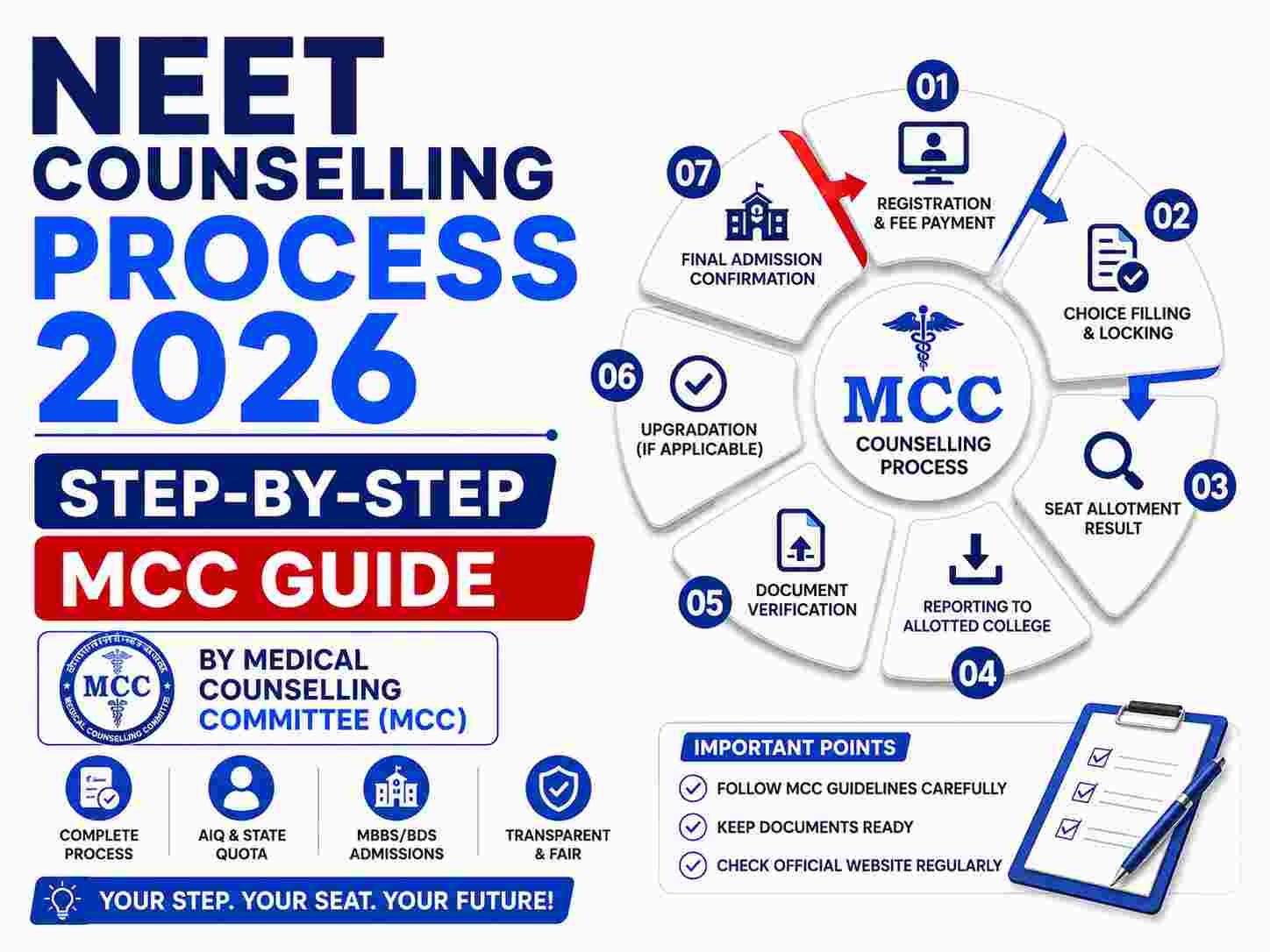
This guide explains the entire MCC counselling process step-by-step, helping you understand exactly what happens after NEET 2026 results are declared.
What is NEET Counselling?
NEET counselling is the centralized admission process through which seats are allotted in MBBS, BDS, BSc Nursing, and various medical programs across India based on NEET rank and eligibility.
The counselling system is broadly divided into two categories:
MCC Counselling
Conducted by the Medical Counselling Committee (MCC) for:
15% All India Quota (AIQ) seats
AIIMS institutions
JIPMER campuses
Central Universities
Deemed Universities
ESIC colleges
State Counselling
Conducted separately by individual state authorities for:
85% State Quota seats
State private medical colleges
State dental colleges
Many students participate in both MCC and state counselling simultaneously to maximize their admission opportunities.
Understanding the Counselling Structure
Before beginning the process, it is important to understand how seat allocation works.
The counselling system generally follows multiple rounds:
Round 1
The first opportunity for candidates to secure a seat.
Round 2
Allows participation for:
Fresh candidates
Candidates seeking upgrades
Candidates who were not allotted seats previously
Mop-Up Round
Conducted for vacant seats remaining after Round 2.
Stray Vacancy Round
The final round for filling any remaining vacant seats.
Each round follows a similar process but comes with different eligibility and exit rules.
Step 1: Check Your NEET Result and Rank
The first step in the neet counselling process begins immediately after the declaration of NEET results.
Candidates should carefully review:
NEET score
All India Rank (AIR)
Category rank
Qualifying status
Your rank will largely determine the colleges and courses available to you during counselling.
Instead of focusing only on scores, students should begin researching colleges that fall within their likely admission range.
This makes choice filling much easier later.
Step 2: Register on the MCC Portal
Once MCC releases the counselling schedule, candidates need to complete online registration.
During registration, students are generally required to enter:
NEET Roll Number
Application Number
Candidate Name
Date of Birth
Personal details
Contact information
Accuracy matters here.
Even small mistakes can create verification issues later during admission.
Many students delay registration until the final days. That's rarely a good idea.
Registering early helps avoid technical issues and last-minute confusion.
Step 3: Pay the Counselling Fees
After registration, candidates must complete fee payment.
Typically, two types of fees are involved:
Registration Fee
A non-refundable fee required for participation.
Security Deposit
A refundable amount that varies depending on the type of institution and counselling category.
This security deposit helps ensure that candidates participate seriously in the counselling process.
Payment is usually accepted through:
Debit Card
Credit Card
Net Banking
UPI
Always save payment receipts and transaction details for future reference.
Step 4: Choice Filling
This is arguably the most important stage of the entire counselling process.
Many students focus only on their NEET score while underestimating the impact of smart choice filling.
During this stage, candidates select:
Preferred colleges
Preferred courses
Preferred order of admission
There is generally no strict limit on the number of choices you can enter.
Smart Choice Filling Tips
Fill as many realistic options as possible.
Include dream colleges and safe colleges.
Prioritize colleges according to genuine preference.
Research previous year cutoffs.
Avoid copying someone else's list blindly.
Your choices should reflect your goals, budget, and admission probability.
The counselling system attempts to allot the highest possible preference available according to your rank.
Step 5: Choice Locking
After completing choice filling, candidates must lock their preferences before the deadline.
This step is often overlooked.
Many students assume saving choices is enough.
It is not.
Choice locking confirms your final college preferences for that counselling round.
Before locking:
Double-Check Everything
College order
Course selection
Category details
Reservation status
State eligibility
Once locked, changes usually cannot be made until the next counselling phase.
A few extra minutes of review can prevent major regrets later.
Step 6: Seat Allotment Process
Once the choice filling window closes, MCC processes seat allocation.
The allotment depends on several factors:
Major Factors Affecting Seat Allotment
NEET rank
Category
Reservation rules
College preferences
Seat availability
Candidate competition
The seat allotment result is published online.
Candidates can download:
Seat allotment letter
Reporting instructions
Admission details
Not getting a seat in Round 1 doesn't mean the process is over.
Many candidates secure seats in later rounds due to upgrades and vacancy movement.
Step 7: Reporting to the Allotted College
If you receive a seat allotment, the next step is physical reporting.
Candidates must visit the allotted institution within the specified timeline.
This stage includes:
Document Verification
Authorities verify:
Identity documents
Academic certificates
NEET records
Category certificates
Reservation claims
Admission Confirmation
Candidates may need to:
Pay admission fees
Submit required documents
Complete joining formalities
Failure to report within the deadline can result in cancellation of the allotted seat.
Documents Required for NEET Counselling 2026
One of the most stressful parts of counselling is document verification.
Preparing documents beforehand can save significant time.
Essential Documents
NEET Admit Card
NEET Scorecard
Seat Allotment Letter
Class 10 Marksheet
Class 12 Marksheet
Class 10 Passing Certificate
Class 12 Passing Certificate
Identity Proof
Passport-size Photographs
Category Documents (If Applicable)
SC Certificate
ST Certificate
OBC Certificate
EWS Certificate
PwD Certificate
Additional Documents
Domicile Certificate (for state counselling)
Migration Certificate (if required)
Character Certificate (if required)
Keeping both physical and scanned copies is highly recommended.
Round 2 Counselling: What Changes?
Many students panic if they don't secure a seat in Round 1.
That's unnecessary.
Round 2 provides another opportunity.
Students may participate if they:
Did not receive a seat earlier
Wish to upgrade their allotted seat
Become newly eligible
Seat movement often becomes significant during Round 2 because many candidates vacate seats or move to preferred institutions.
This creates new opportunities for other students.
What is the Mop-Up Round?
The Mop-Up Round is conducted after the main counselling rounds.
Its purpose is simple:
Fill remaining vacant seats.
Candidates who remain unallotted after earlier rounds often receive another chance here.
Mop-Up Round Benefits
Additional seat availability
Fresh opportunities
Participation in vacant colleges
Chance to secure admissions that were unavailable earlier
Many students eventually secure good colleges through Mop-Up counselling.
That's why staying active throughout the process is important.
Common Mistakes Students Make During Counselling
Even strong candidates make avoidable mistakes.
Here are some of the most common ones:
Filling Too Few Choices
A limited choice list reduces admission opportunities.
Ignoring State Counselling
Many students focus only on MCC counselling and miss valuable state quota seats.
Missing Deadlines
Registration windows are strict.
Late participation is usually not permitted.
Poor College Research
Choosing colleges without understanding fees, location, infrastructure, and hospital exposure can create problems later.
Incomplete Documentation
Missing certificates often delay or cancel admissions.
Preparation matters.
Counselling rewards organized students.
AIQ vs State Counselling: Which Should You Choose?
The answer is simple:
Choose both whenever possible.
Advantages of MCC (AIQ) Counselling
National-level opportunities
Access to AIIMS and central institutions
Wider college pool
Advantages of State Counselling
State reservation benefits
Lower competition in some cases
More local college options
Participating in both increases your chances of securing the best possible seat.
There's rarely a reason to limit yourself to only one counselling pathway.
Final Thoughts
The neet counselling process is much more than a simple seat allocation exercise.
It's the final step that transforms your NEET rank into an actual medical college admission.
Understanding registration, choice filling, seat allotment, reporting procedures, and document verification can significantly improve your chances of securing a good college.
The students who succeed in counselling aren't always the ones with the highest ranks.
Often, they're the ones who understand the process, plan strategically, meet deadlines, and make informed decisions.
A strong NEET score opens the door.
Smart counselling helps you walk through it.
Article Stats