 All Articles
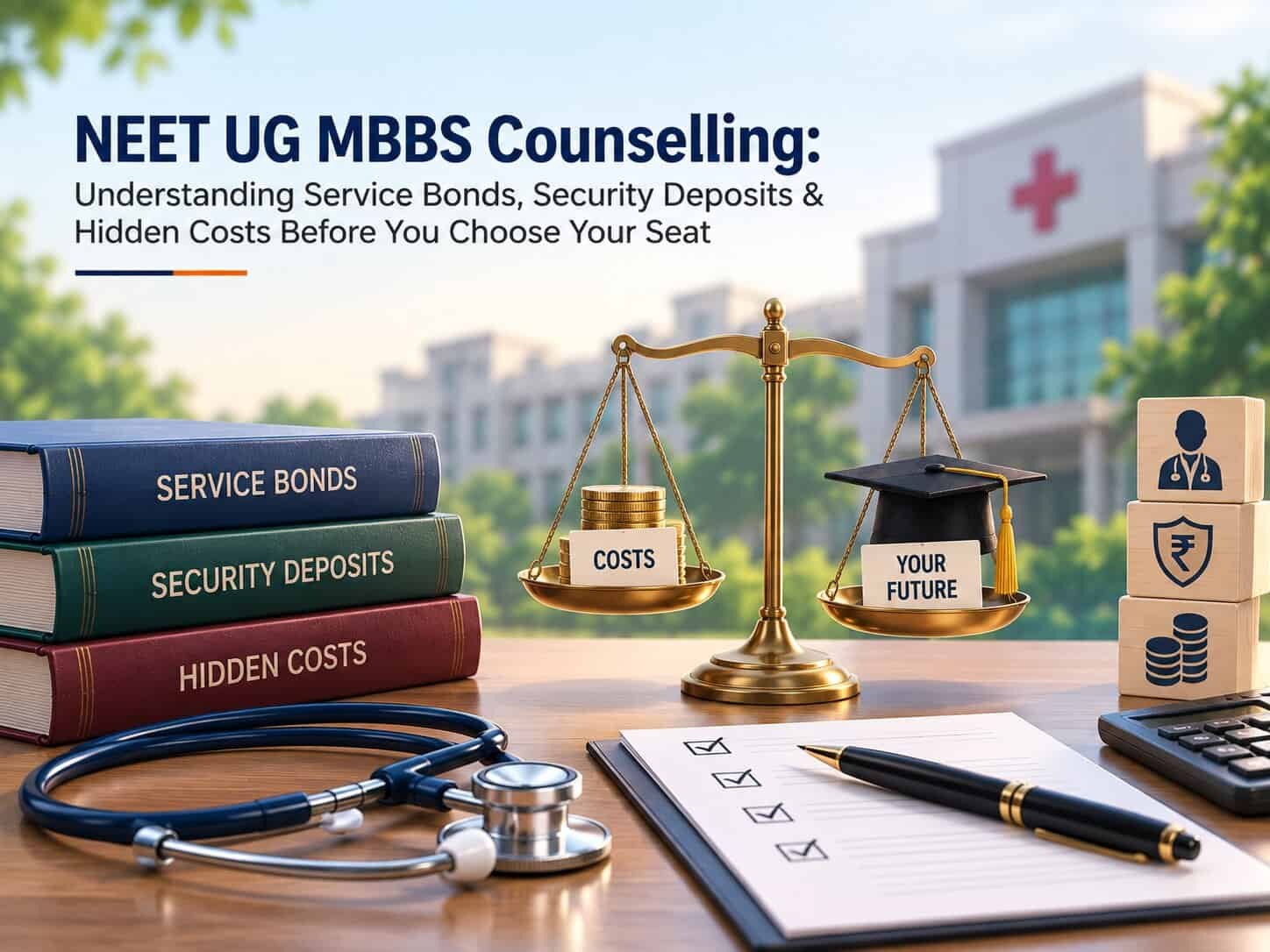
NEET UG MBBS Counselling: Understanding Service Bonds, & Hidden Costs Before You Choose Your Seat
Every year, thousands of NEET UG candidates lock in an MBBS seat during MCC or state counselling without fully understanding two things that can cost lakhs later: the service bond attached to many government seats, and the security deposits that get forfeited if you exit counselling at the wrong stage. Here's a clear breakdown of both, so you know exactly what you're signing up for before you finalise your choices.
What Is a Service Bond, and Why Does It Matter?
Most government MBBS seats - and some private ones - come with a service bond: an obligation to serve at a government health facility for a fixed period after you graduate, or pay a financial penalty instead. This is a real financial commitment layered on top of your course fee, and it varies dramatically from state to state. Before finalising your choice list, you should know both the penalty amount and the service duration tied to each state you're considering.
Service Bond Rules, State by State
Bond terms differ sharply across states, both in penalty size and in how many years of service they demand:
Assam requires 5 years of service, including rural posting, with a penalty of ₹30,00,000 if the bond is broken.
Dadra & Nagar Haveli and Daman & Diu asks for up to 2 years of service, with a penalty that can go up to ₹40,00,000.
Haryana sets a 5-year government service requirement, with a penalty of ₹25,77,090 for male candidates and ₹23,19,381 for female candidates.
Chhattisgarh requires 1 year of service, with a penalty of ₹25 lakh for Unreserved candidates and ₹20 lakh for reserved-category candidates.
Odisha requires 2 years of service, with a ₹25,00,000 penalty.
Punjab requires 2 years of service for state-quota seats and 1 year for AIQ seats, with a ₹20,00,000 penalty.
Jharkhand charges a ₹20,00,000 seat-leaving penalty, though this isn't structured as a post-service bond.
Gujarat requires 1 year of service, with a ₹20,00,000 penalty.
Delhi introduced a 1-year bond from the 2025-26 session, with a ₹15,00,000 penalty.
Karnataka requires 1 year of service with a ₹15,00,000 penalty — and importantly, this bond can no longer be paid off, a rule change effective from 2024.
Madhya Pradesh requires 1–2 years of service, with a penalty of ₹10 lakh for Unreserved candidates and ₹5 lakh for reserved-category candidates.
Uttar Pradesh requires 2 years of service, with a ₹10,00,000 penalty.
Maharashtra requires 1 year of service, with a mandatory ₹10,00,000 penalty that cannot be paid off in lieu of service.
Goa requires 1 year of service, with a ₹10,00,000 penalty.
Tamil Nadu requires 5 years of service, with a ₹5 lakh penalty plus a separate ₹10 lakh seat-discontinuation penalty.
Rajasthan requires 2 years of service, with a ₹5,00,000 penalty.
West Bengal has no service-period requirement, but charges a ₹1,00,000 penalty specifically for leaving an allotted seat.
Andhra Pradesh, Telangana, Kerala, Himachal Pradesh, Puducherry, and Bihar currently have no service bond at all.
Uttarakhand's bond position is unverified in current comparisons - the service is understood to be mandatory, but the exact duration isn't confirmed, so candidates should check the current brochure directly.
Two states stand out for stricter enforcement: Karnataka's bond can no longer be bought out with the penalty amount, and Karnataka has already enforced this bond against 208 graduates who failed to report for duty, as confirmed as of January 2026. Maharashtra's bond is similarly mandatory and cannot be paid off in place of service.
For a handful of other states and Union Territories, the bond position isn't independently verified in publicly available comparisons, so candidates considering these regions should check the current year's counselling brochure directly rather than relying on last year's figures.
No Service Bond Doesn't Mean No Exit Penalty
This is one of the most misunderstood points in NEET UG counselling: a state having no service bond does not mean it has no penalty for leaving the course midway. These are two separate triggers —
A service bond penalises you for skipping the post-graduation government posting.
An exit/discontinuation penalty penalises you for quitting the MBBS course itself before completion.
Even states with no service bond can still charge a steep exit penalty if you discontinue your seat mid-course: Bihar charges ₹30,00,000, Telangana charges ₹20,00,000, Kerala charges ₹10,00,000, and Andhra Pradesh charges ₹3,00,000 plus GST.
So a candidate choosing a "no-bond" state purely to avoid future service obligations should still budget for the possibility of a large exit penalty if personal circumstances force them to discontinue the course.
Security Deposits: What You Can Actually Lose During Counselling
Separately from service bonds, MCC and most states charge a security deposit at the time of registration or choice-filling, and these deposits stack — an MCC deposit plus a state deposit, both at risk if you exit counselling at the wrong round.
How the MCC deposit works: Candidates applying for deemed university seats are charged ₹2,00,000. Candidates in the AIQ, AIIMS, JIPMER, and ESIC pools pay ₹10,000 if they fall under UR or EWS, and ₹5,000 if they fall under SC, ST, OBC, or PwD categories.
A detail candidates frequently miss: simply ticking "Apply for Deemed Universities" during registration — even without ever choosing a deemed college — moves your MCC deposit from ₹10,000 up to ₹2,00,000. That's a ₹1,90,000 swing triggered by a single checkbox, so read that option carefully before selecting it.
State deposits stack on top of the MCC deposit, and some states escalate the amount round by round. Karnataka, for instance, raises its deposit progressively from ₹10,000 to ₹1,00,000 as rounds proceed. Rajasthan charges NRI-quota candidates a deposit as high as ₹5,00,000.
When you actually lose the deposit: Exiting after Round 1 carries no penalty anywhere — this is the safest stage to withdraw if you're unsatisfied with your options. From Round 2 onward, however, walking away from an allotted seat forfeits your deposit. The most severe outcome is a no-show in a Stray Vacancy round, which forfeits the deposit and debars you from appearing in NEET the following year.
In terms of overall exposure, government-seat-only candidates typically have roughly ₹40,000–₹60,000 in total deposit risk. Candidates also hedging with deemed or private options are looking at roughly ₹4–4.5 lakh. NRI or multi-state candidates can have ₹9 lakh or more at stake across pools.
The Advertised Fee Is Rarely the Whole Number
Government MBBS fees look deceptively small in isolation — tuition at some government colleges runs into just a few thousand rupees a year. But the real cost of a seat only becomes clear once you add the service bond penalty, the exit penalty, and the security deposits together. A comparable private-quota or management-quota seat in the same state can run into several lakh — or in some cases over ₹40 lakh a year — making the bond and deposit structure a genuinely significant part of the total financial decision, not a footnote.
Why This Matters for Your Choice List
Bond penalties, exit penalties, and deposit amounts don't show up prominently in most counselling brochures the way seat matrices and cutoff ranks do — but they directly affect the real financial risk of every choice you fill. A seat that looks attractive purely on cutoff rank could carry a five-year, ₹30-lakh service obligation, while a similar-rank seat in another state might carry no bond at all. Before you lock your preference order, it's worth mapping every shortlisted state and college against its actual bond, penalty, and deposit terms — not just its fee and cutoff.
Know Your Bond & Service Obligations Before You Choose
Bond amounts, service duration, and deposit rules change from year to year and can vary even within a state's own quota categories. If you want a detailed, verified breakdown of the exact bond and service terms for the specific states and colleges you're targeting this counselling season, an effective dashboard can help you check this in detail before you finalise your choices.
Article Stats
You Might Also Like
Odisha MBBS & BDS Round 2 Counselling 2026: Provisional Admission Schedule Released

NTA Confirms NEET-UG Will Shift to Computer-Based Test Mode Soon, Nilekani Task Force Drafting Roadmap
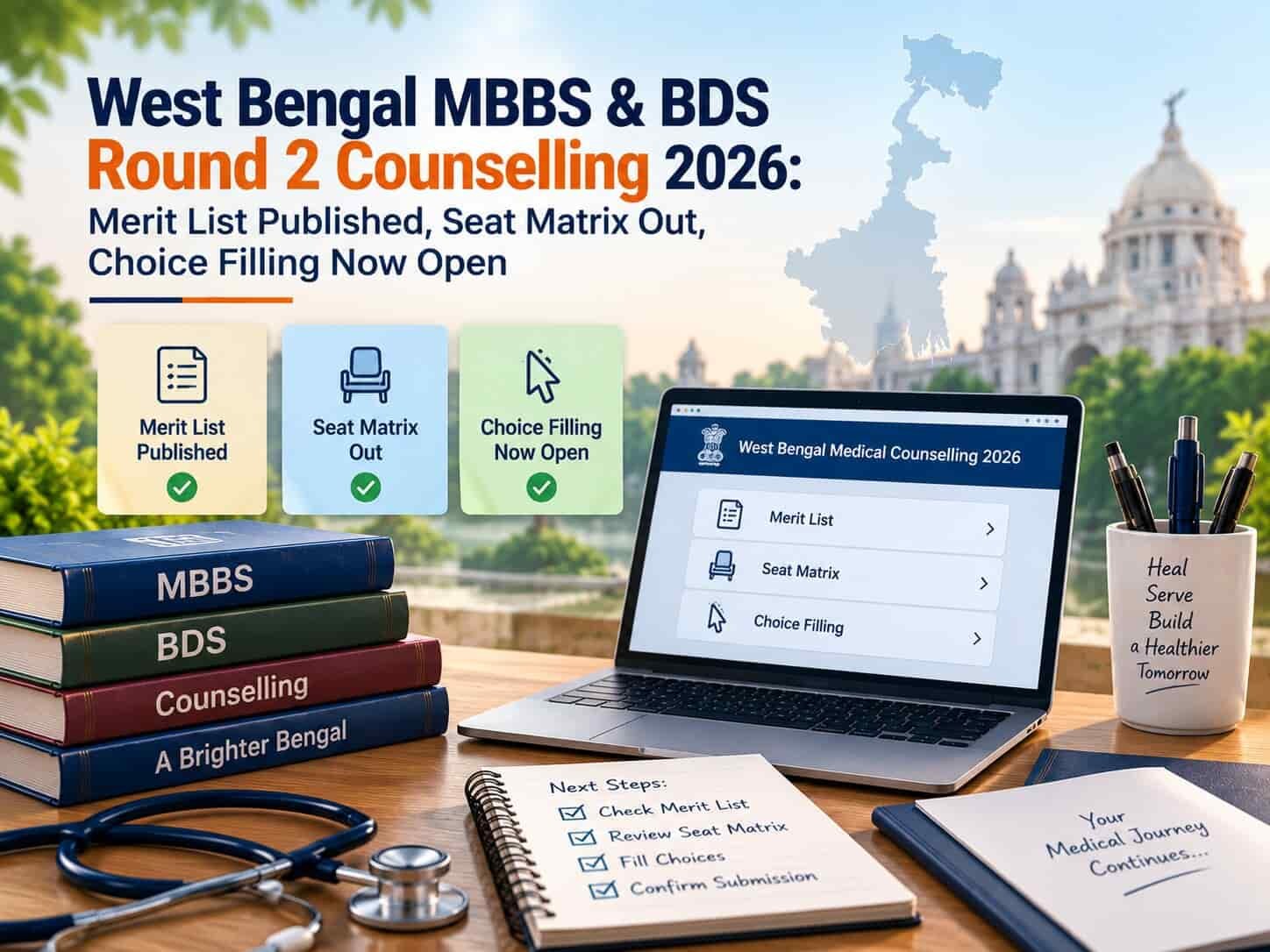
West Bengal MBBS & BDS Round 2 Counselling 2026: Merit List Published, Seat Matrix Out, Choice Filling Now Open