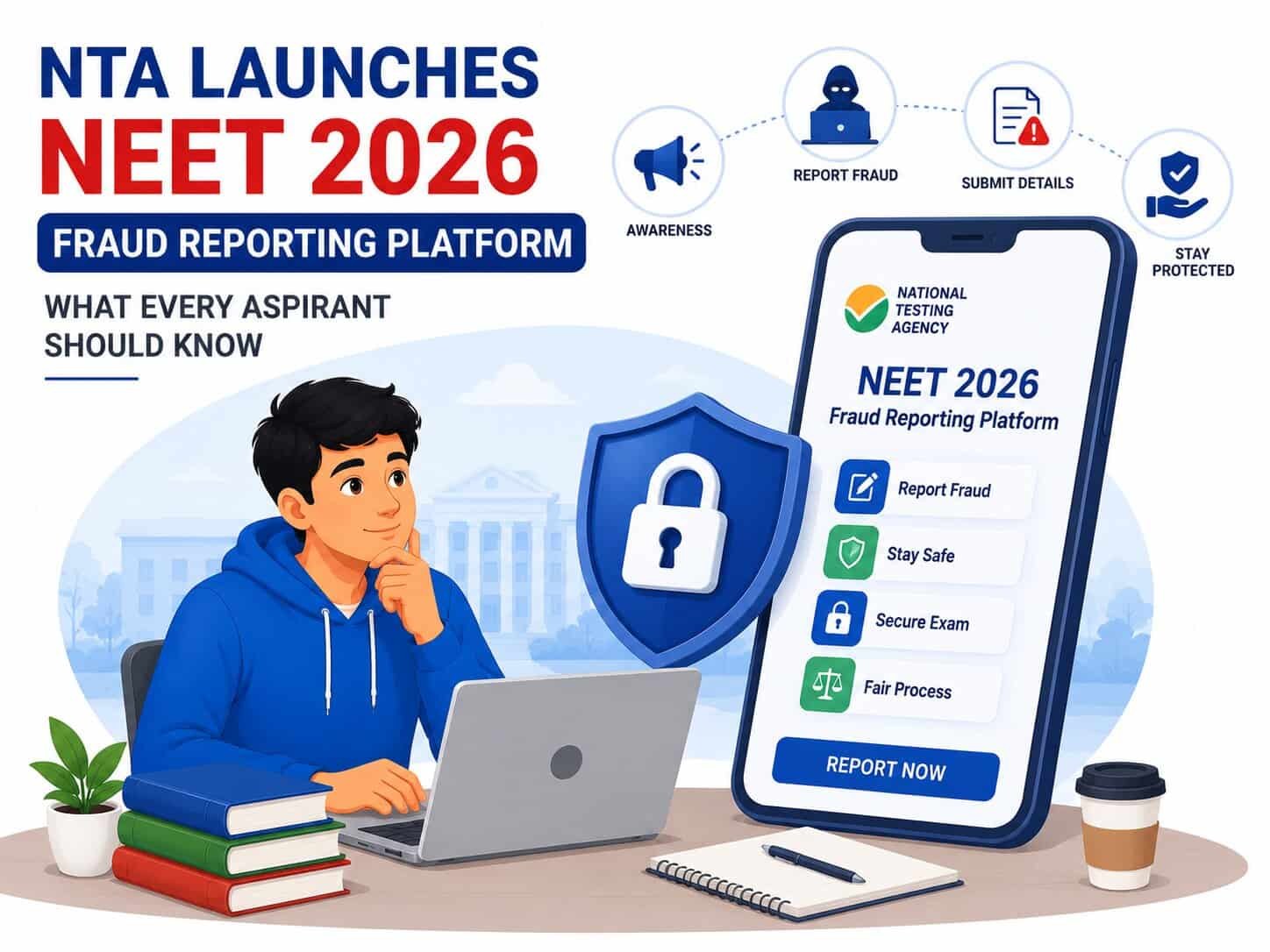
As the NEET UG 2026 examination approaches, the National Testing Agency (NTA) has taken another major step to strengthen the credibility and security of India's largest undergraduate medical entrance examination. On 15 June 2026, NTA officially launched a dedicated reporting platform that enables candidates, parents, coaching institutes, and the general public to report suspicious claims, fake paper leak rumours, impersonation attempts, and other fraudulent activities related to NEET UG 2026.
The initiative comes just days before the examination scheduled for 21 June 2026 and reflects the agency's continued efforts to ensure a fair, transparent, and secure examination process. In recent years, misinformation surrounding competitive examinations has spread rapidly through social media platforms, messaging apps, and unauthorised websites. Fake promises of leaked question papers, guaranteed ranks, or access to answer keys have misled thousands of students, creating unnecessary panic during one of the most crucial phases of their academic journey.
Recognising these growing concerns, NTA has introduced a simple mechanism through which anyone can report suspicious content directly to the authorities. Rather than allowing misinformation to circulate unchecked, the agency is encouraging the public to actively participate in protecting the integrity of the examination.
For students preparing for the upcoming examination, this development is as important as staying updated with the latest NEET 2026 examination guidelines, syllabus changes, and counselling procedures. Keeping track of authentic information through reliable educational resources and official notifications has become more important than ever.
Why Has NTA Introduced This Reporting Platform?
Every year, as NEET approaches, social media witnesses a surge in fake advertisements claiming access to confidential examination material. Fraudsters often exploit the anxiety of students by promising leaked question papers, early answer keys, guaranteed scores, or admission assistance in exchange for money.
These scams not only target students financially but also create confusion and erode confidence in the examination process.
Through its latest public notice, NTA has made it absolutely clear that no individual, coaching institute, organisation, or online platform has access to the NEET UG 2026 question paper before the examination. Any claim suggesting otherwise should be treated as false and immediately reported.
The newly launched reporting portal serves two important objectives. First, it allows authorities to identify and act against individuals attempting to spread misinformation. Second, it reassures genuine aspirants that suspicious activities are being closely monitored, thereby strengthening public trust in the examination system.
This move is also part of NTA's broader commitment to improving transparency following recent reforms aimed at safeguarding high-stakes entrance examinations across the country.
What Can Be Reported?
The reporting platform has been designed to cover a wide range of suspicious activities associated with NEET UG 2026. Candidates are encouraged to report any information that appears misleading, fraudulent, or intended to manipulate students.
Some of the most common activities that can now be reported include:
Websites claiming to possess the NEET UG 2026 question paper.
Social media accounts sharing alleged leaked papers.
Telegram or WhatsApp groups selling question papers.
Fake answer key circulation before the examination.
Individuals promising guaranteed NEET ranks or admission.
Coaching institutes advertising "confirmed" examination content.
Persons impersonating NTA officials or government representatives.
Any misleading content designed to create panic among students and parents.
The reporting mechanism is not limited to these situations. Any activity that appears suspicious or attempts to exploit NEET aspirants can also be submitted for investigation.
How Does the Reporting Portal Work?
NTA has kept the reporting process straightforward so that anyone can submit information without technical difficulty.
When reporting an incident, users may provide:
A brief description of the suspicious activity.
The platform where it was found (website, WhatsApp, Telegram, Instagram, YouTube, Facebook, etc.).
Date and time of the incident.
Screenshots of chats or advertisements.
Website links or social media profiles.
Supporting documents, wherever available.
Providing detailed evidence allows authorities to investigate the matter more efficiently and take appropriate legal action if required.
The dedicated reporting portal is available through the Government of India's MyGov platform, while candidates may also report suspicious information through NTA's official websites.
Why Students Should Never Trust Paper Leak Claims
The pressure surrounding NEET often makes students vulnerable to false promises. Every year, numerous fraudulent groups exploit this pressure by claiming they have advance access to examination papers or official answer keys.
In reality, NTA has reiterated that the question paper remains under strict security protocols until the examination begins. Any person claiming prior access is attempting to mislead candidates.
Trusting such claims can have serious consequences:
Financial loss due to scams.
Emotional stress before the examination.
Disqualification if candidates engage in illegal activities.
Exposure to cyber fraud and identity theft.
Legal consequences in cases involving examination malpractice.
Rather than relying on rumours, students should focus on revision, mock tests, and official announcements released through NTA.
Those preparing for the examination may also benefit from understanding the latest NMC updates for NEET UG 2026, as recent regulatory developments have influenced various aspects of medical admissions.
NTA's Collaboration with PIB and Law Enforcement
The latest public notice also highlights that NTA is working closely with the Press Information Bureau (PIB) Fact Check Unit and law enforcement agencies to identify misleading information related to NEET UG 2026.
Whenever fake government-related content begins circulating online, PIB's Fact Check Unit investigates such claims and issues clarifications where necessary. Candidates can also report misleading government-related information through PIB's official communication channels.
This collaborative approach demonstrates that examination security today extends beyond the examination hall. Monitoring digital platforms has become equally important in maintaining fairness.
By combining technological monitoring, public reporting, and legal enforcement, authorities aim to reduce the spread of misinformation before it reaches a larger audience.
How Aspirants Can Protect Themselves from Online Scams
Students themselves play a significant role in maintaining the integrity of the examination process. A few practical precautions can prevent unnecessary stress during the final days before NEET.
Some good practices include:
Follow only official NTA notifications.
Ignore claims of leaked papers.
Never pay money for guaranteed ranks or admissions.
Verify information before forwarding messages.
Avoid joining suspicious Telegram or WhatsApp groups.
Report fraudulent activities immediately.
Keep personal information secure.
Rely on authentic educational sources for updates.
Many rumours begin with a single forwarded message. Verifying information before sharing it helps prevent misinformation from spreading further.
Students should also remain updated with official examination schedules, application deadlines, and counselling announcements through reliable educational resources. Reading the latest NEET application and examination schedule can help aspirants stay informed about genuine updates instead of depending on unofficial social media posts.
What This Means for NEET 2026 Candidates
The introduction of this reporting platform is more than just another administrative announcement. It reflects a broader shift towards making India's medical entrance examination process more transparent, accountable, and secure.
Candidates now have an official channel to report suspicious activities instead of simply ignoring or forwarding them. This empowers students, parents, coaching institutes, and educators to collectively contribute towards a fair examination environment.
The timing of this initiative is equally significant. With the examination scheduled for 21 June 2026, misinformation tends to peak during the final week of preparation. Providing an accessible reporting mechanism before the examination helps reduce confusion at a critical stage.
For students, the message from NTA is clear: preparation should be based on authentic study material, official notifications, and disciplined revision—not rumours circulating online.
Those already planning for admission after NEET should also begin understanding the complete NEET counselling process, since informed decision-making becomes equally important once examination results are announced.
Similarly, candidates researching medical colleges can benefit from exploring guidance on choosing the right medical college after NEET, helping them prepare beyond the examination itself.
The Bigger Picture: Strengthening Trust in Public Examinations
Competitive examinations influence the academic and professional futures of millions of students every year. Maintaining public confidence in these examinations requires continuous vigilance against misinformation and fraudulent activities.
The launch of the dedicated NEET UG 2026 reporting platform demonstrates NTA's proactive approach towards addressing these challenges. Instead of reacting after rumours spread widely, the agency is encouraging early reporting, faster verification, and coordinated action with government agencies.
While no examination system can completely eliminate attempts at fraud, strong preventive measures significantly reduce opportunities for misinformation to influence genuine candidates.
Ultimately, the success of this initiative depends not only on the authorities but also on the cooperation of students, parents, educators, coaching institutes, and the wider public.
Conclusion
With NEET UG 2026 just around the corner, NTA's dedicated fraud reporting platform serves as an important safeguard against misinformation, impersonation, and examination-related scams. By providing a direct mechanism to report suspicious claims, the agency has reinforced its commitment to conducting a transparent, secure, and fair examination.
Candidates should remember that no person or organisation has legitimate access to the NEET UG 2026 question paper or answer key before the examination. Any claim suggesting otherwise should be treated as fraudulent and reported through the official reporting portal or NTA's authorised websites.
As the final days of preparation begin, aspirants should remain focused on revision, avoid unverified information circulating on social media, and rely solely on official communications issued by NTA. A calm, informed, and disciplined approach remains the strongest strategy—not just for succeeding in NEET 2026, but also for navigating the admission process that follows.
Article Stats