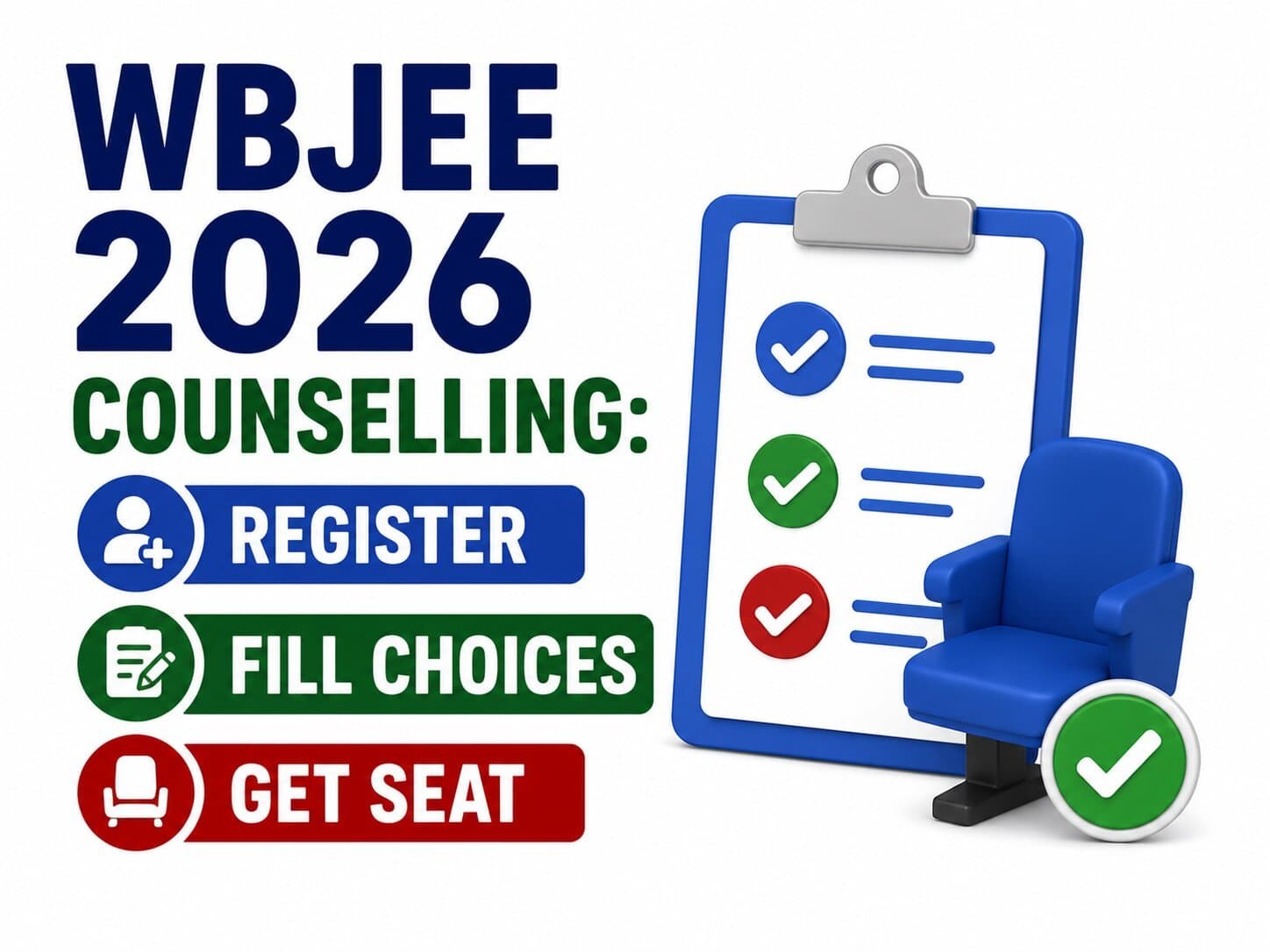
For thousands of engineering, pharmacy, and architecture aspirants across West Bengal, WBJEE 2026 is only the first step toward securing admission into a preferred college. While a good rank certainly improves opportunities, the real admission battle often begins after the results are declared.
Every year, students focus heavily on examination preparation but spend very little time understanding the counselling process. As a result, many candidates with competitive ranks fail to secure their desired colleges simply because they make avoidable mistakes during registration, choice filling, or seat allotment.

WBJEE counselling is more than just a formality. It is a structured admission process that determines where students eventually study and what course they receive. A strong rank can open doors, but smart counselling decisions are what help students walk through them.
Understanding each stage of the process before counselling begins can significantly improve admission outcomes and reduce unnecessary stress during one of the most important phases of a student's academic journey.
Why WBJEE Counselling Matters
Many students believe that admission depends entirely on rank.
In reality, counselling introduces several additional factors that influence seat allocation.
These include:
Merit rank
Category and reservation status
College preferences
Course preferences
Seat availability
Participation in counselling rounds
Vacancy movement
Two students with similar ranks may ultimately receive very different allotments depending on the choices they submit during counselling.
This is why candidates should begin planning early rather than waiting until registration opens.
Students who have previously explored structured admission systems such as the NEET counselling process and seat allocation framework often find it easier to understand how counselling decisions influence final admission outcomes.
Although WBJEE and NEET are different examinations, the importance of strategic choice filling remains remarkably similar.
Understanding the WBJEE Counselling Process
The counselling process generally follows a structured sequence.
Each stage plays a crucial role in determining final allotment results.
The major steps include:
Online registration
Fee payment
Choice filling
Choice locking
Seat allotment
Document verification
Admission confirmation
Participation in subsequent rounds (if applicable)
Candidates who understand these stages beforehand tend to navigate counselling with far greater confidence.
Missing deadlines or misunderstanding procedures can lead to lost admission opportunities regardless of rank.
Registration: The First Step
Registration marks the official beginning of counselling participation.
Students must complete registration within the specified timeframe announced by the counselling authority.
During registration, candidates generally provide:
Personal details
Academic information
WBJEE credentials
Contact information
Category details
Reservation information (if applicable)
Accuracy is extremely important.
Errors in registration can create complications later during document verification and admission reporting.
Before registration begins, students should prepare all required documents in advance to avoid last-minute difficulties.
Choice Filling: Where Admission Strategies Matter
Among all counselling stages, choice filling is arguably the most important.
This is where students decide which colleges and courses they want to pursue.
Unfortunately, many candidates approach this stage emotionally rather than strategically.
Some students fill only a handful of prestigious colleges.
Others simply copy the preferences of friends without considering their own rank and career goals.
Neither approach is particularly effective.
A balanced preference list should generally include:
Dream colleges
Competitive options
Realistic possibilities
Backup choices
The objective is not merely to chase the highest-ranked institution but to maximize admission opportunities across multiple counselling rounds.
How to Research Colleges Before Filling Choices
One of the most common mistakes students make is selecting colleges based solely on reputation.
A better approach is to evaluate institutions using multiple criteria.
Important factors include:
Placement records
Faculty quality
Infrastructure
Industry exposure
Internship opportunities
Research facilities
Campus environment
Alumni outcomes
Students often discover that a college slightly lower in ranking may offer stronger opportunities for their specific career interests.
Thorough research before choice filling almost always leads to better long-term satisfaction.
Understanding Seat Allotment
Seat allotment is the stage that receives the most attention during counselling.
After choice filling closes, the counselling authority begins allocating seats based on:
Candidate rank
Reservation category
Choice preferences
Seat availability
This process continues until available seats are assigned according to counselling rules.
Possible outcomes include:
Receiving a first-choice college
Receiving a lower-preference institution
Receiving an upgraded allotment in future rounds
Not receiving an allotment during a particular round
This is why choice order matters significantly.
A poorly structured preference list can reduce admission possibilities even when a student has a competitive rank.
Round 1 Counselling
Round 1 typically allocates a substantial portion of available seats.
Many candidates receive their first allotment during this stage.
Students who receive seats generally have options such as:
Accepting the allotted seat
Seeking upgrades
Participating in future rounds
Exploring alternative opportunities
Candidates should carefully review counselling instructions before making decisions regarding seat acceptance.
Round 2 and Upgradation Opportunities
Many students underestimate the importance of Round 2.
As candidates withdraw, upgrade, or fail to report, vacancies begin to emerge across institutions.
These vacancies often create opportunities that did not exist during the first round.
Benefits of continued participation include:
Better college options
Improved course allotments
Upgradation possibilities
Access to newly vacant seats
Students who remain engaged throughout counselling generally maximize their chances of securing preferred institutions.
Understanding Opening and Closing Ranks
Opening and closing ranks provide valuable insights during choice filling.
These figures indicate the rank range within which admissions occurred in previous years.
However, students should use these numbers cautiously.
Several factors can alter admission trends:
Changes in applicant volume
Variation in examination difficulty
New seat additions
Reservation adjustments
Counselling participation rates
Rather than treating past cut-offs as guarantees, candidates should view them as reference points.
Documents Required During Counselling
Document preparation is often overlooked until the last moment.
Candidates should keep the following documents ready:
WBJEE Rank Card
Admit Card
Class 10 Marksheet
Class 12 Marksheet
Identity Proof
Passport Photographs
Category Certificate (if applicable)
Domicile Certificate (if required)
Having documents organized beforehand helps avoid unnecessary stress during reporting and verification.
Common Mistakes Students Make During Counselling
Every year, similar errors affect admission outcomes.
Some of the most common include:
Filling too few choices
Ignoring backup colleges
Missing deadlines
Forgetting to lock choices
Poor college research
Overreliance on previous cut-offs
Failure to monitor updates
Avoiding these mistakes can significantly improve counselling outcomes.
Scholarships and Financial Planning
College selection should not be based solely on admission chances.
Financial planning is equally important.
Students should evaluate:
Tuition fees
Hostel costs
Living expenses
Academic expenses
Scholarship opportunities
Many students are unaware that several funding options exist for deserving candidates.
Exploring available scholarships for NEET and JEE aspirants before finalizing admission decisions can help reduce financial pressure later.
Staying Updated During Counselling Season
Admission opportunities often depend on timely information.
Students should regularly monitor:
Registration schedules
Seat matrix updates
Vacancy announcements
Allotment results
Reporting deadlines
Reliable educational resources and counselling updates can help students stay informed throughout the admission cycle.
Candidates preparing for multiple entrance pathways often find value in following broader admission developments, including updates related to West Bengal medical counselling and WBMCC admissions and recent NMC policy changes affecting healthcare admissions, as these developments often reflect larger trends in higher education admissions.
Similarly, students exploring alternative professional courses may benefit from tracking updates regarding SMFWBEE 2026 admissions and application schedules to understand additional educational opportunities available across West Bengal.
Final Thoughts
WBJEE counselling is not simply a technical process that follows examination results.
It is a critical admission stage where strategy, preparation, and timely decision-making play a major role.
Students who perform well during counselling typically:
Research colleges thoroughly
Understand seat allotment rules
Fill balanced preference lists
Participate actively in all counselling rounds
Monitor updates consistently
Prepare documentation early
Consider financial planning alongside academics
A strong WBJEE rank creates possibilities.
The choices made during counselling determine how effectively those possibilities are converted into actual admission opportunities.
Approach counselling with preparation, patience, and a clear strategy, and you will significantly improve your chances of securing a seat in the college and course that best aligns with your future goals.
Article Stats
You Might Also Like
What Is the MS Course? A Complete Guide to Introduction, Eligibility, NEET PG Counselling and Preparation
What Is the MD Course? A Complete Guide to Introduction, Eligibility, NEET PG Counselling and Preparation
Tripura MBBS BDS Round 3 Re-Revised Schedule 2026: Choice Filling, Merit List, Allotment and Admission Dates