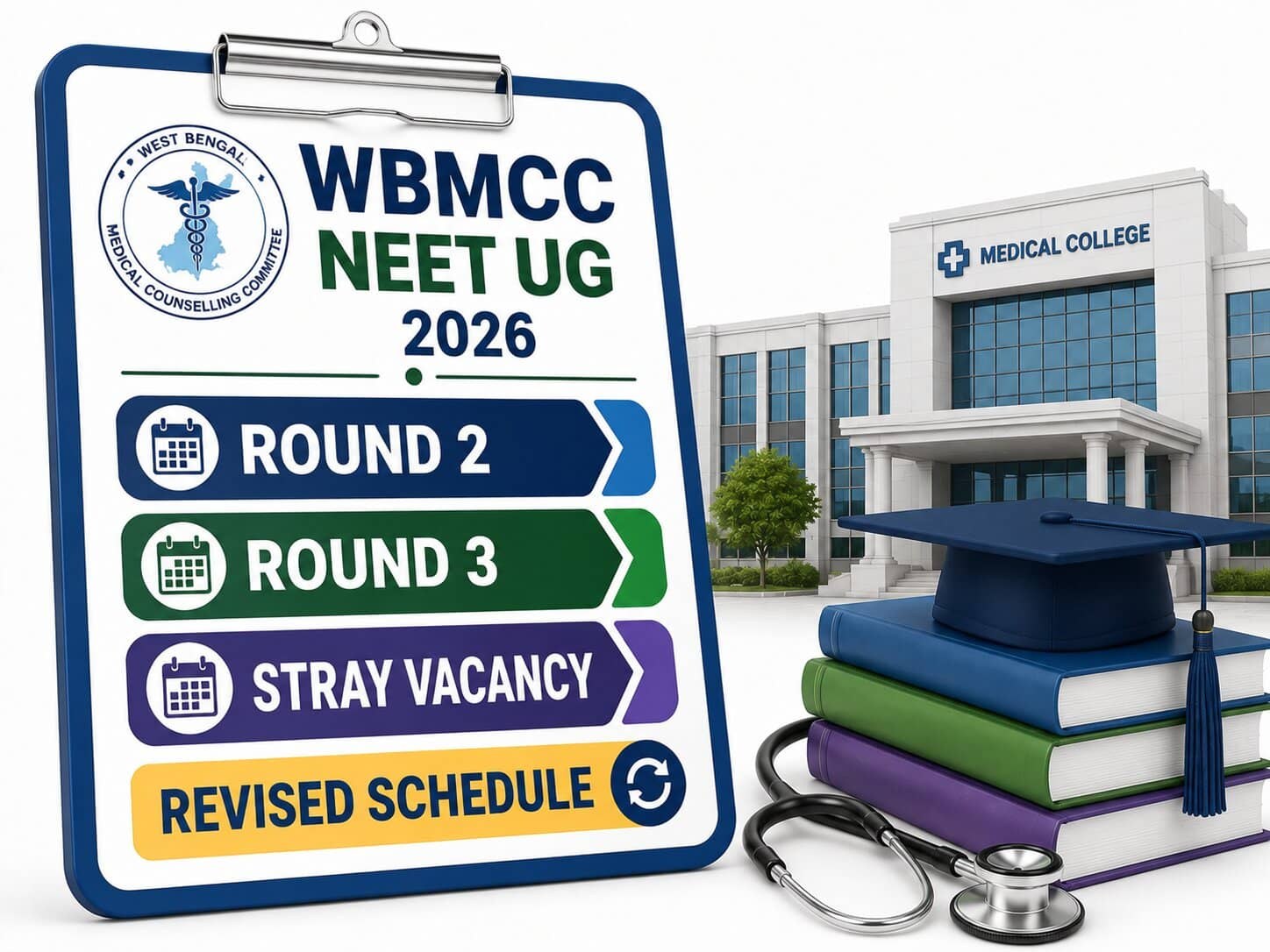
For thousands of medical aspirants across West Bengal, clearing NEET is only the first step toward securing a seat in a medical college. The next phase counselling is where admissions are actually decided. Every year, students spend months preparing for the entrance examination, yet many remain confused about how the counselling process works, what choices to fill, how seat allotment happens, and which colleges they realistically have a chance of getting into.
This is where understanding the West Bengal Medical Counselling Committee (WBMCC) becomes extremely important. WBMCC is responsible for conducting state-level counselling for medical, dental, and AYUSH admissions in West Bengal. Through its online counselling system, eligible candidates can compete for state quota seats in government institutions as well as seats in private colleges.

For students searching for reliable information about counselling for college admissions in Kolkata, particularly for MBBS and BDS courses, understanding the WBMCC process can make the difference between making confident admission decisions and feeling completely overwhelmed during counselling rounds.
Understanding WBMCC and Its Role
The West Bengal Medical Counselling Committee was established under the Department of Health and Family Welfare, Government of West Bengal, to manage the counselling and admission process for various undergraduate and postgraduate medical programs within the state. The committee oversees online counselling procedures, seat allotment, admission schedules, documentation requirements, and other admission-related activities.
For undergraduate admissions, WBMCC primarily handles:
MBBS admissions
BDS admissions
AYUSH admissions
State quota seats
Management quota seats in eligible institutions
NRI quota seats in certain private medical colleges
The counselling process is conducted entirely online, making it easier for students across West Bengal to participate without needing to travel repeatedly for admissions.
While the process may appear straightforward on paper, the reality is often much more complex. Multiple rounds, changing cut-offs, seat matrices, reservation categories, and college preferences all influence the final outcome.
Why Counselling Matters More Than Many Students Realise
Many students mistakenly assume that their NEET score alone determines their admission.
While rank certainly plays a major role, counselling strategy can significantly impact which college a student ultimately secures.
Two students with similar scores may end up in completely different institutions depending on how they approach counselling. One may strategically fill choices based on previous trends and realistic expectations, while another may focus only on a few highly competitive colleges and miss other valuable opportunities.
This is why counselling should never be treated as a simple administrative process.
A well-planned counselling strategy helps students:
Maximize admission opportunities
Improve college selection decisions
Avoid common choice-filling mistakes
Understand realistic seat possibilities
Navigate multiple counselling rounds effectively
The goal isn't simply getting a seat. It's securing the best possible option based on rank, category, budget, and career aspirations.
Eligibility for WBMCC Counselling
Before participating in counselling, candidates must ensure they meet the required eligibility criteria.
The most fundamental requirement is qualifying for the NEET examination during the relevant admission year. Candidates seeking MBBS and BDS admissions through WBMCC must have a valid NEET score and satisfy the eligibility conditions prescribed by the counselling authority.
Eligibility often involves considerations such as:
NEET qualification
Domicile requirements where applicable
Category certificates (if applicable)
Educational qualifications
Age requirements
Reservation eligibility
Students should carefully review official counselling notifications every year because eligibility requirements may be updated based on regulatory guidelines.
Understanding State Quota and Other Seat Categories
One of the most confusing aspects of counselling for first-time applicants is understanding different seat categories.
In West Bengal, admissions are generally distributed across various categories depending on the type of institution and seat availability.
State Quota Seats
A significant portion of seats in government medical and dental colleges falls under the state quota system. These seats are allotted through WBMCC based on merit, reservation policies, and eligibility conditions.
Management Quota Seats
Private medical colleges often offer management quota seats. These seats provide additional admission opportunities for eligible candidates and are also managed through the counselling process.
NRI Quota Seats
Certain private medical institutions offer NRI quota seats, which have separate eligibility requirements and admission procedures. Understanding these categories helps students broaden their options and create a more effective counselling strategy.
Step-by-Step WBMCC Counselling Process
Although schedules can vary from year to year, the counselling process generally follows a structured sequence.
Registration
The first step is online registration through the official WBMCC portal. Candidates must provide personal information, academic details, NEET credentials, and other required information. Students should ensure that all information entered during registration matches their official documents exactly.
Fee Payment
After registration, candidates are generally required to complete the prescribed counselling fee payment process. Only after successful payment can they proceed to the next stages of counselling.
Merit List Publication
The counselling authority publishes merit lists based on NEET scores and eligibility criteria.
These lists determine the order in which candidates compete for available seats.
Merit rank plays a crucial role throughout every counselling round.
Choice Filling and Locking
This is arguably the most important stage of the entire counselling process.
Candidates must select and prioritise colleges and courses according to their preferences.
Many students make the mistake of making choices emotionally rather than strategically.
A strong choice-filling strategy generally considers:
Previous cut-off trends
Seat availability
College reputation
Location preferences
Fee structures
Future career goals
Once choices are finalised, candidates must lock them within the specified deadline.
Seat Allotment
Based on merit rank, reservation criteria, available seats, and candidate preferences, WBMCC releases seat allotment results.
Candidates who receive allotments can proceed according to the instructions provided for admission or participation in subsequent rounds.
Reporting and Admission
After allotment, students must complete document verification and admission formalities within the specified timeline.
Failure to report within the deadline may result in forfeiture of the allotted seat.
Counselling Rounds Explained
Many students assume counselling ends after a single round.
In reality, multiple rounds are often conducted to fill available seats efficiently.
Round 1
This is the primary counselling round where most candidates participate.
Students receive their first opportunity to secure seats based on merit and preferences.
Round 2
Candidates who are not allotted seats in Round 1 or wish to seek better options may participate in subsequent rounds, subject to applicable rules.
Round 2 often creates opportunities for seat upgrades.
Mop-Up Round
After regular rounds conclude, vacant seats may remain available due to withdrawals, non-reporting candidates, or seat upgrades.
Mop-up rounds are conducted to fill these vacancies.
Many students secure admissions through mop-up rounds after missing opportunities in earlier stages. Discussions among NEET aspirants frequently highlight the importance of staying engaged until all counselling rounds conclude.
Stray Vacancy Round
Certain admission cycles may include additional rounds to fill remaining vacancies.
Students should monitor official announcements regularly because opportunities can arise even in the later stages of counselling.
Common Mistakes Students Make During Counselling
Despite extensive preparation for NEET, many students make avoidable counselling mistakes.
One common error is unrealistic choice filling.
Students sometimes list only highly competitive colleges despite having ranks that make admission unlikely. While aspirational choices are important, they should be balanced with realistic options.
Another mistake is ignoring lower-preference colleges entirely. Many students later regret not including colleges they would have happily joined.
Other common mistakes include:
Missing deadlines
Incomplete documentation
Failure to lock choices
Not participating in later rounds
Ignoring official notifications
Incorrect category information
The counselling process rewards preparation just as much as the entrance examination itself.
Documents Required During Counselling
While exact requirements can vary each year, candidates generally need to prepare several important documents in advance.
These often include:
NEET scorecard
NEET admit card
Class 10 certificate
Class 12 mark sheet
Identity proof
Passport-sized photographs
Category certificates (if applicable)
Domicile certificates were required
Other supporting documents specified by the authority
Keeping digital and physical copies organised before counselling begins can prevent last-minute complications.
Choosing the Right Medical College
Many students focus exclusively on rankings.
While rankings matter, selecting a college should involve several additional factors.
A college that suits one student perfectly may not be the best choice for another.
Important considerations include:
Academic reputation
Clinical exposure
Faculty quality
Infrastructure
Internship opportunities
Hostel facilities
Fee structure
Location
Future postgraduate prospects
Students should evaluate colleges holistically rather than relying solely on popularity.
Government vs Private Medical Colleges
One of the biggest decisions during counselling involves choosing between government and private institutions.
Government medical colleges generally offer lower tuition fees and strong patient exposure due to high clinical volumes.
Private institutions may provide modern infrastructure, smaller student batches, and additional facilities, although fee structures are often higher.
The decision ultimately depends on:
Rank
Budget
Career objectives
Available options during counselling
Students should evaluate both categories carefully before finalising preferences.
How to Stay Updated During Counselling
Admission schedules can change.
Additional rounds may be announced.
Seat matrices may be revised.
New notifications may affect eligibility or reporting requirements.
For this reason, students should regularly monitor official counselling updates rather than relying solely on social media discussions or unofficial information sources.
Useful practices include:
Checking official notifications daily
Following the counselling schedules carefully
Tracking seat allotment announcements
Maintaining document readiness
Monitoring round-wise updates
Staying informed often helps students identify opportunities that others miss.
Final Thoughts
The WBMCC counselling process is one of the most important stages of a medical aspirant's journey. While NEET performance determines eligibility and competitiveness, counselling decisions often determine where a student ultimately studies.
Understanding seat categories, registration procedures, counselling rounds, choice-filling strategies, and admission requirements can significantly improve outcomes during the admission process.
For students seeking counselling for college admissions in Kolkata, especially for MBBS, BDS, and related medical programs, preparation should extend beyond the examination itself. A thoughtful counselling strategy, realistic college selection, careful document preparation, and close attention to official updates can make the admission journey far smoother.
The most successful candidates are usually not just those with strong scores they are the ones who approach counselling with equal preparation, patience, and planning. By understanding the WBMCC process thoroughly, students can make informed decisions and maximize their chances of securing a seat in the institution that best supports their future medical career.
Article Stats