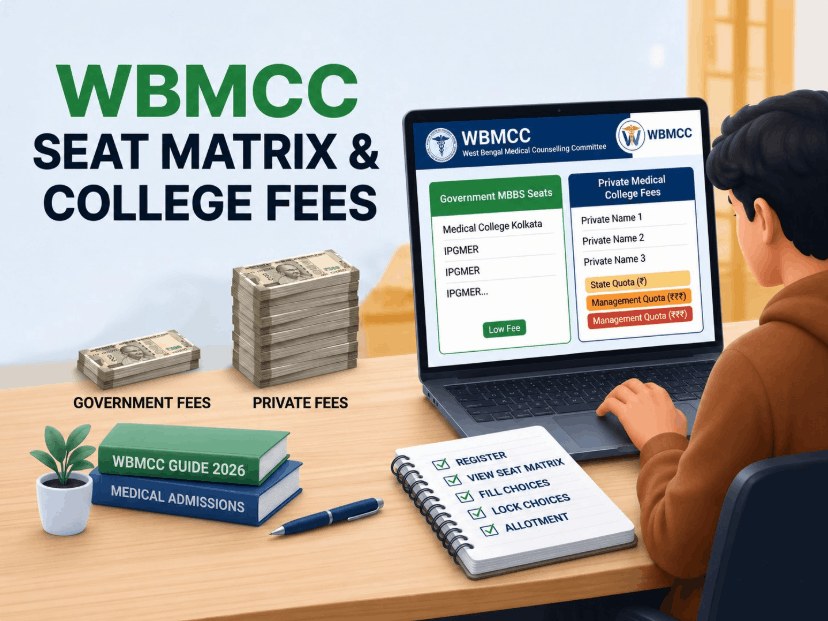
Earning a competitive score in NEET UG is a monumental milestone, but understanding the financial reality of your options is what actually locks in your medical career.
For medical aspirants in West Bengal, analyzing the official seat distributions and institutional tuition rates is the most critical step before entering the counseling portal. Miscalculating the immense cost differences between various seat categories can lead to severe financial stress or force you to withdraw from a seat you have already been allotted.
That’s why staying informed is crucial.
Evaluating the wbmcc seat matrix and fee structure early allows you to build a highly realistic preference sheet tailored to your family's budget. It removes the risk of listing high-cost private choices above lower-cost options, keeping your entire choice-locking strategy safe and data-driven.
In this comparative breakdown, we map out the current institutional seat categories, tuition cost matrices, and strategic steps to balance your budget during the state allocation rounds.
Understanding the WBMCC Seat Quota Classifications
The West Bengal Medical Counselling Committee divides the state’s total MBBS seat pool into three distinct structural categories across government and private institutions.
Your All India Rank and your financial budget dictate which of these specific pathways you should target during choice submission:
Government Seat Pool: These seats are located entirely within state-run medical colleges and offer the lowest tuition rates, reserved strictly for candidates holding a valid West Bengal domicile.
Private College State Quota (PC-SQ): These are subsidized seats inside private medical institutions reserved for local domicile students, offering a middle-ground fee option.
Private College Management Quota (PC-MQ): These seats are open to candidates nationwide on a pure merit baseline, featuring premium, open-market tuition rates.
Navigating these distinct categories carefully during your portal session prevents expensive choice-filling mistakes.
Government vs. Private MBBS Fee Matrix Breakdown
The financial commitment varies dramatically across the different seat pools in West Bengal. Review these general fee parameters to calculate your academic budget before the portals open:
State Government Medical Colleges
Annual Tuition Fees: Range between ₹9,000 to ₹15,000 per year depending on the specific state institution.
Admission Fees & Deposits: Require an upfront payment of roughly ₹5,000 to ₹10,000 covering caution money and library entries during day-one reporting.
Overall Trajectory: This remains the most affordable pathway, keeping the entire four-and-a-half-year academic cost well under ₹1 Lakh.
Private Medical Colleges (State Quota Seats)
Annual Tuition Fees: Typically range between ₹4.5 Lakhs to ₹5.5 Lakhs per year.
Overall Trajectory: This pathway bridges the gap for local students who missed the pure government cutoffs, keeping the total course tuition around ₹22 Lakhs to ₹25 Lakhs.
Private Medical Colleges (Management Quota Seats)
Annual Tuition Fees: Generally scale from ₹18 Lakhs to ₹22 Lakhs per year.
Overall Trajectory: These open-market seats represent a significant financial investment, with the total course tuition often climbing past ₹80 Lakhs to ₹90 Lakhs excluding hostel costs.
Step-by-Step Budget Mapping for Choice-Filling
To ensure your institutional preferences align perfectly with your family's financial roadmap, you must process your selections systematically.
Follow this step-by-step method to organize your preference sheet:
Step 1: Download the Active Round Seat Matrix
Access the official counseling board portal right as the registration window opens.
Download the finalized seat matrix PDF to verify the exact count of open seats across your specific category codes.
Step 2: Separate Your Targets by Cost Brackets
List your verified government medical choices at the top of your draft sheet to maximize your affordable options.
Group your private state quota choices below your government options if your budget allows for semi-subsidized tuition.
Place open-market private management choices at the bottom only if you have active bank guarantees or self-funded reserves ready.
Step 3: Verify Hidden Institutional Charges
Check individual college websites to map out mandatory hostel fees, mess charges, and annual university examination costs.
Ensure your calculated budget tracks these supplementary expenses alongside the core annual tuition fees.
The primary difference between a State Quota and a Management Quota seat in a West Bengal private medical college
State Quota seats inside private colleges are reserved exclusively for candidates holding a West Bengal domicile and are subsidized, costing around ₹4.5 Lakhs to ₹5.5 Lakhs per year. Management Quota seats are open to students nationwide and cost significantly more, ranging from ₹18 Lakhs to ₹22 Lakhs annually.
An outside-state student apply for low-cost government medical seats through WBMCC
No. The 85% state quota seats across all West Bengal government medical colleges are strictly reserved for permanent residents who provide a verified local domicile certificate. Outside-state candidates can only access government seats via the 15% All India Quota managed by the Medical Counselling Committee (MCC).
Are the MBBS fee structures fixed for the entire duration of the course in West Bengal
Yes. The core tuition fee structure finalized during your admission round remains fixed for your entire academic tenure at that institution. However, minor annual variations can occur in localized university registration fees, examination charges, or hostel mess rates.
Action Plan for Post-Allotment Financial Readiness
Following a secure financial routine prevents processing failures during high-stakes admission deadlines:
Keep Demand Draft Parameters Verified: Private medical institutions routinely demand tuition payments via physical Demand Drafts (DD). Cross-check the exact corporate bank names specified by the college before finalizing your drafts.
Review Education Loan Timelines: Educational bank loans can take several weeks to clear. Initiate your institutional verification and rank dialogue with your banking managers well ahead of time.
Track Refund Rules Closely: Review the official state exit policies carefully to know how and when tuition deposits are returned if you successfully upgrade to a better college during Round 2.
Conclusion
For medical aspirants structuring their enrollment plans, mastering the wbmcc seat matrix and fee structure is just as vital as clearing the national entrance exam.
From separating state quota subsidies from open management costs to verifying hidden hostel expenses, entering the live choice-locking phase with clean financial numbers protects your family from unexpected surprises.
The smartest approach is simple:
Monitor official seat matrix updates regularly on the verified state portal.
Order your preference sheets strictly by your financial comfort zones.
Cross-verify college fees directly with official institutional notices.
Complete your bank arrangements early to handle rapid reporting timelines smoothly.
Remaining methodical, budget-conscious, and highly proactive keeps your higher education pathway fully optimized, leading you smoothly toward a successful career in medicine.
Article Stats
You Might Also Like

What Is the MS Course? A Complete Guide to Introduction, Eligibility, NEET PG Counselling and Preparation

What Is the MD Course? A Complete Guide to Introduction, Eligibility, NEET PG Counselling and Preparation
Tripura MBBS BDS Round 3 Re-Revised Schedule 2026: Choice Filling, Merit List, Allotment and Admission Dates